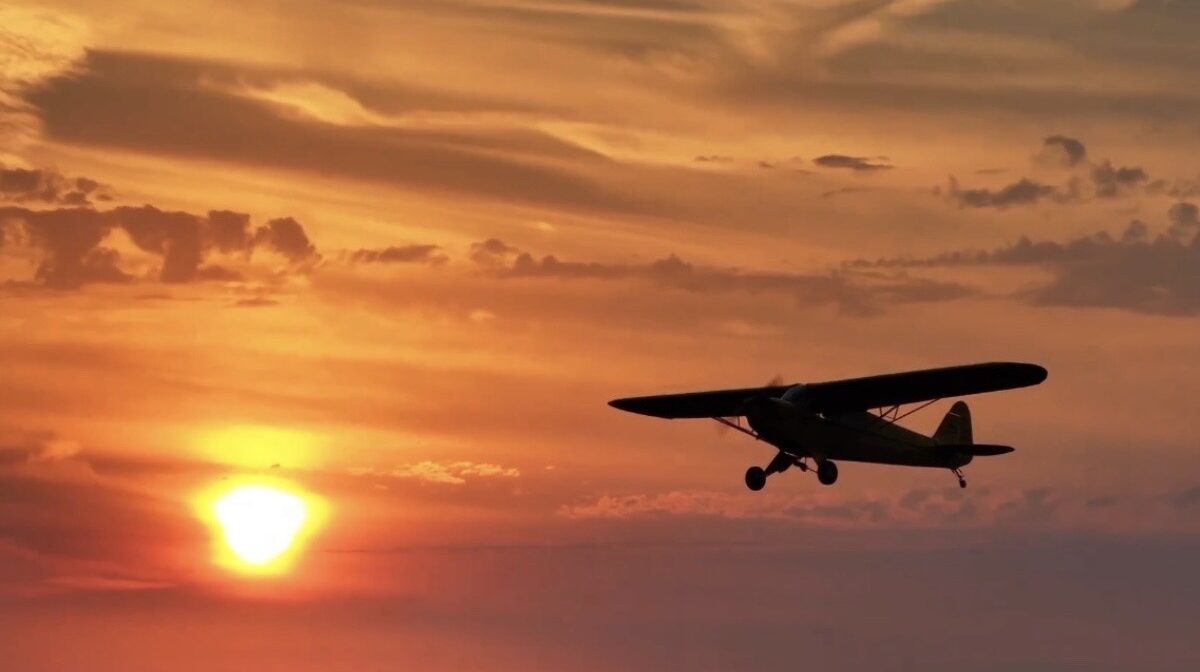
Start Your Journey: Become a Pilot
Choosing the right certificate is your first step. Below is a break down off the requirements and the key differences between the Sport Pilot and Private Pilot certificates.
1. The Sport Pilot Certificate
The most accessible way to get into the sky.
Thanks to the 2025 MOSAIC updates, Sport Pilots are no longer limited to tiny “Light-Sport” aircraft. You can now fly many of the most popular training aircraft (like the Cessna 172 or Piper Cherokee) under these privileges.
Requirements:
- Age: 16 to solo, 17 to earn the certificate.
- Medical: A valid U.S. Driver’s License (as long as you haven’t had an FAA medical denied).
- Training: * 20 Hours minimum total flight time.
- 15 Hours of instruction (Dual).
- 5 Hours of solo flight.
- Testing: Pass one FAA Knowledge (Written) Test and one Practical Test (Checkride).
Privileges & Limitations:
- Carry 1 Passenger: You can fly a 4-seat airplane, but you are limited to one passenger.
- Daytime VFR: Standard privileges are for daytime flying in good weather.
- Night Flying (New!): Under 2025 rules, you can fly at night if you receive specific training and hold a 3rd Class Medical or BasicMed.
- Speed & Altitude: Fly up to 250 knots and up to 10,000 feet MSL.
2. The Private Pilot Certificate
The “Gold Standard” for maximum freedom.
The Private Pilot certificate allows you to fly almost any single-engine aircraft and carry as many passengers as the plane has seats for. This is the required foundation if you plan to get an Instrument Rating or fly commercially.
Requirements:
- Age: 16 to solo, 17 to earn the certificate.
- Medical: Must hold at least a Third-Class FAA Medical Certificate or BasicMed.
- Training: * 40 Hours minimum total flight time
- 20 Hours of instruction (Dual), including 3 hours of night and 3 hours of instrument training.
- 10 Hours of solo flight, including 5 hours of cross-country.
- Testing: Pass one FAA Knowledge (Written) Test and one Practical Test (Checkride).
Privileges & Limitations:
- No Passenger Limit: Carry as many friends or family members as the aircraft is rated for.
- Night & Airspace: Full privileges to fly at night and in all types of controlled airspace.
- International: Fly outside the U.S. (subject to foreign regulations).
- Growth: This is the prerequisite for an Instrument Rating (flying through clouds).
Which One Should You Choose?
| Feature | Sport Pilot | Private Pilot |
| Medical Required | Driver’s License | FAA Medical Exam |
| Passengers | 1 Passenger | Multiple Passengers |
| Night Flying | Only with Endorsement + Medical | Included |
| Min. Flight Hours | 20 | 40 |
| Total Cost | Lower (Less training time) | Higher (More training/requirements) |
The “Stepping Stone” Advantage
Don’t feel pressured to choose! Every hour you log while training for your Sport Pilot certificate counts toward your Private Pilot certificate. Many students start as Sport Pilots to get their license quickly, and then “upgrade” to Private Pilot later once they’ve gained experience.